
Advice from Oran Duke
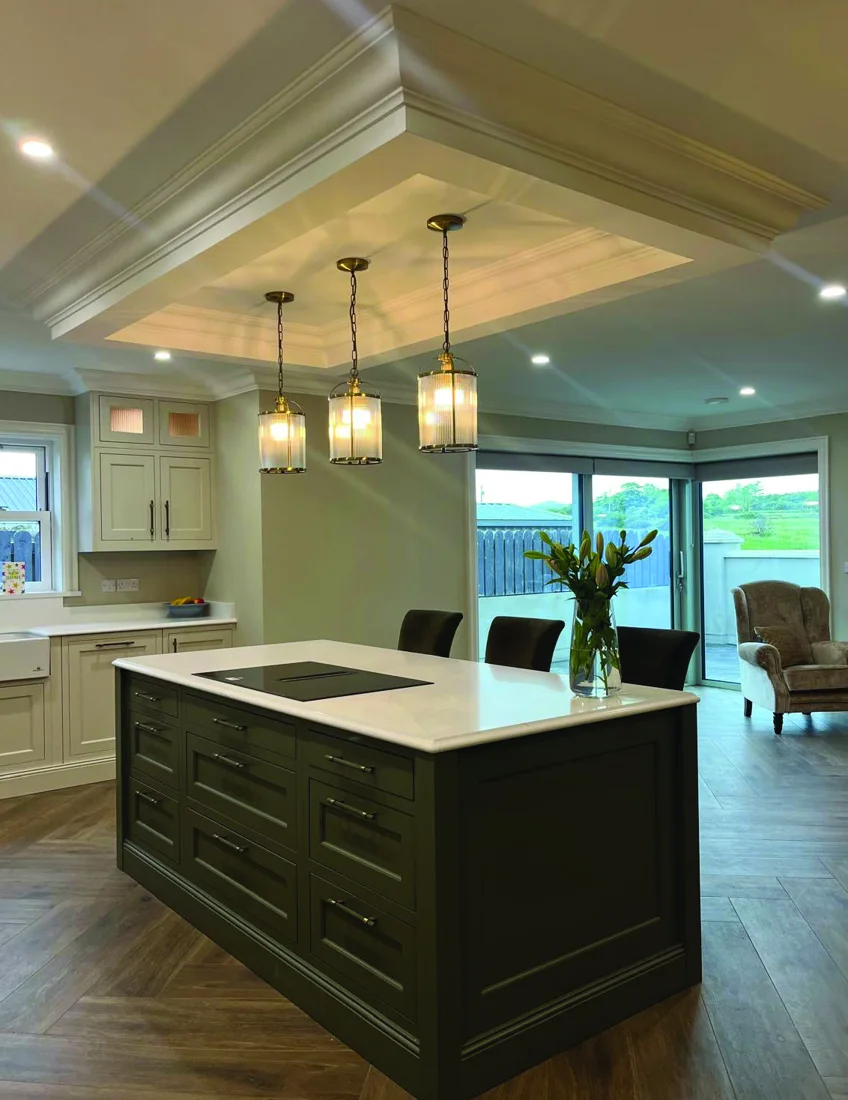
Buying a new kitchen is exciting, but the money side can get confusing very quickly. What is actually worth spending on? Where can you save? And how do you make sure you’re comparing like with like? These are some of the questions I’m asked most often.
So… how much should I actually budget for a new kitchen?
There isn’t one perfect number, because two kitchens of exactly the same size can have completely different prices. A straightforward kitchen with standard cabinetry, sensible appliances and a simple worktop is a very different project from a bespoke kitchen with lots of drawers, internal storage, premium appliances, stone worktops and specialist features.
The best thing you can do is decide what you’re comfortable spending before you start designing. And don’t be embarrassed about having a budget. A good kitchen designer actually wants to know it. If your budget is €20,000, I’d rather design the best possible €20,000 kitchen than show you a €35,000 kitchen you fall in love with and then have to strip half of it out.
Budget should guide the design, not spoil it.
What actually makes one kitchen so much more expensive than another?
People often assume it’s simply the size of the room, but specification can make just as much difference. Drawers generally cost more than cupboards. Tall pantry units cost more than simple base units. Pocket doors, internal storage systems, bespoke sizes, specialist finishes and complicated corner mechanisms all add up.
Then you have worktops, appliances, sinks, taps and installation. You could take the same basic kitchen layout and quite easily add thousands to the price simply by changing the specification. That doesn’t mean those upgrades are bad. Some are fantastic.
The trick is spending money on the ones that genuinely improve how you’ll use the kitchen.
What are the things people tend to underestimate?
Worktops and appliances are probably the big two. Someone might choose a beautiful stone worktop, add waterfall ends to the island, an undermount sink, drainage grooves and a few extra details, and suddenly the worktop budget has moved considerably.
Appliances are similar. An oven is one thing. Then we add a combi oven, warming drawer, integrated fridge, full freezer, wine cooler, venting hob and boiling-water tap, and we’re having a very different conversation. The other big one is the work around the kitchen.
Electrics, plumbing, flooring, decorating, plastering or building work may not be part of the kitchen quotation at all. That’s why I always encourage people to think about the whole project budget, not just the price of the cabinets.
Where should I spend the money, and where can I save?
Spend it on the layout first. I’d take a beautifully designed €20,000 kitchen over a badly designed €40,000 kitchen every day of the week. After that, spend on the things you’ll touch and use constantly: good cabinetry, practical drawers, worktops that suit your lifestyle and appliances you genuinely need.
You can save by keeping certain things simple. Not every cupboard needs an expensive internal mechanism. You may not need bespoke-width cabinets everywhere. You might choose one statement feature instead of making every part of the kitchen the expensive option.
A good designer should be able to tell you, “Spend here. Save there. You’ll never notice the difference.”
That’s far more valuable than simply adding upgrades to a quotation.
Should I always go with the cheapest quotation?
No, but you shouldn’t automatically go with the most expensive one either. The biggest mistake is comparing the figure at the bottom of two quotations without checking what’s actually included. One company may have included fitting, delivery, stone worktops, bins, internal storage and all the finishing panels.
Another quotation may look thousands cheaper because half of those things aren’t there. It’s a bit like comparing the price of two cars when one has the engine listed separately. Compare like with like. Ask what cabinetry you’re getting, what is included, what isn’t included, what happens during installation and what support you receive afterwards.
That tells you far more than the final number on its own.
What’s the biggest piece of money advice you’d give someone buying a kitchen? Don’t spend money just because something is fashionable.
Spend it where it makes your kitchen better. I’ve seen people obsess over an expensive feature while compromising something far more important to how the room works. Your kitchen should suit how you live: how you cook, how your family uses the room, how much storage you need and what you actually care about.
Set a realistic overall budget. Be upfront about it. Get the layout right. Then decide where you want to add the beautiful stuff. Because the goal isn’t to create the most expensive kitchen you can afford. It’s to create the best kitchen you can afford.
Set the budget first. Design the kitchen second. Then make every euro earn its place.
Read the original magazine feature
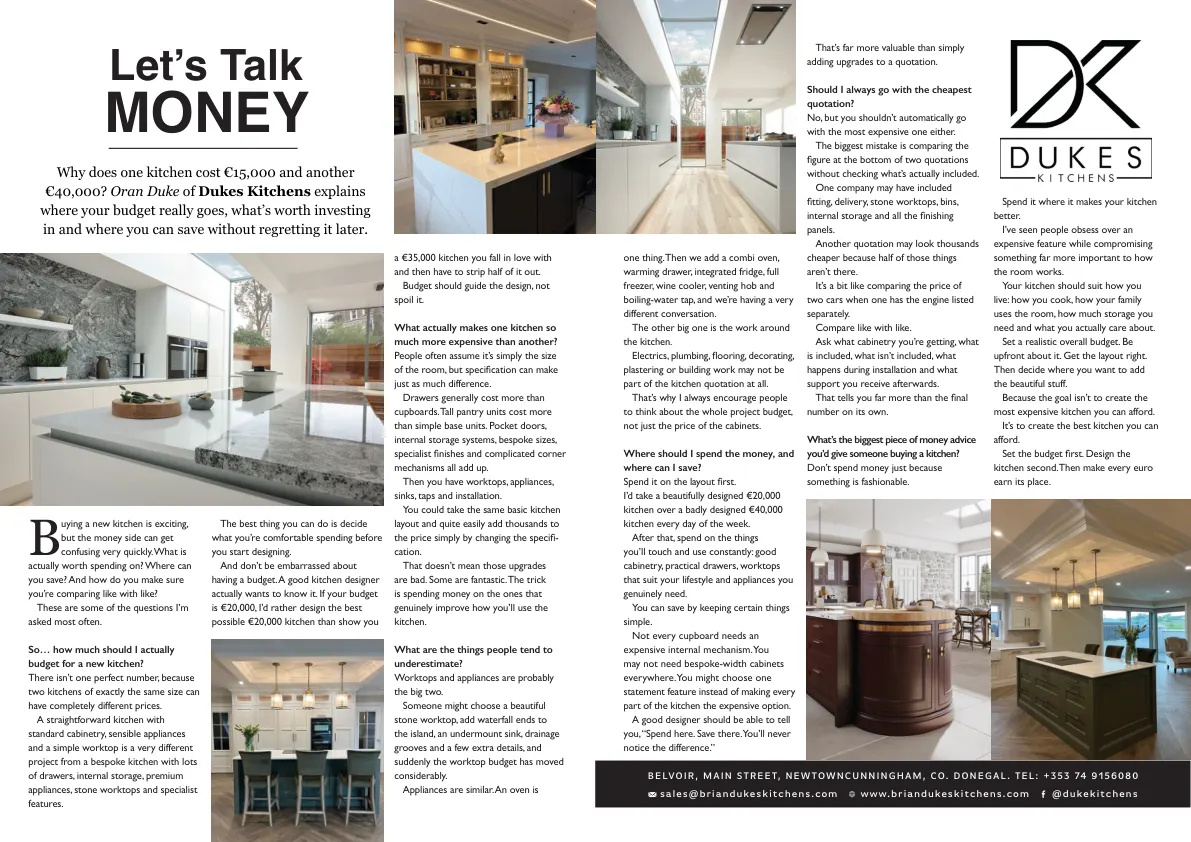
Originally featured in Local Women.
Keep exploring
- Before You Buy a Kitchen — Where to begin, what to bring to your appointment and how to plan a kitchen around the people who use it.
- The Smart Way to Plan YOUR DREAM KITCHEN — Oran Duke on layout, lighting, realistic budgets and the design decisions that help avoid costly changes later.
Explore the Dukes collections · Discover Live Design · Kitchen planning advice · Real Dukes Kitchens
Thinking about your own kitchen? Book a free initial consultation to talk through your plans with our team.